

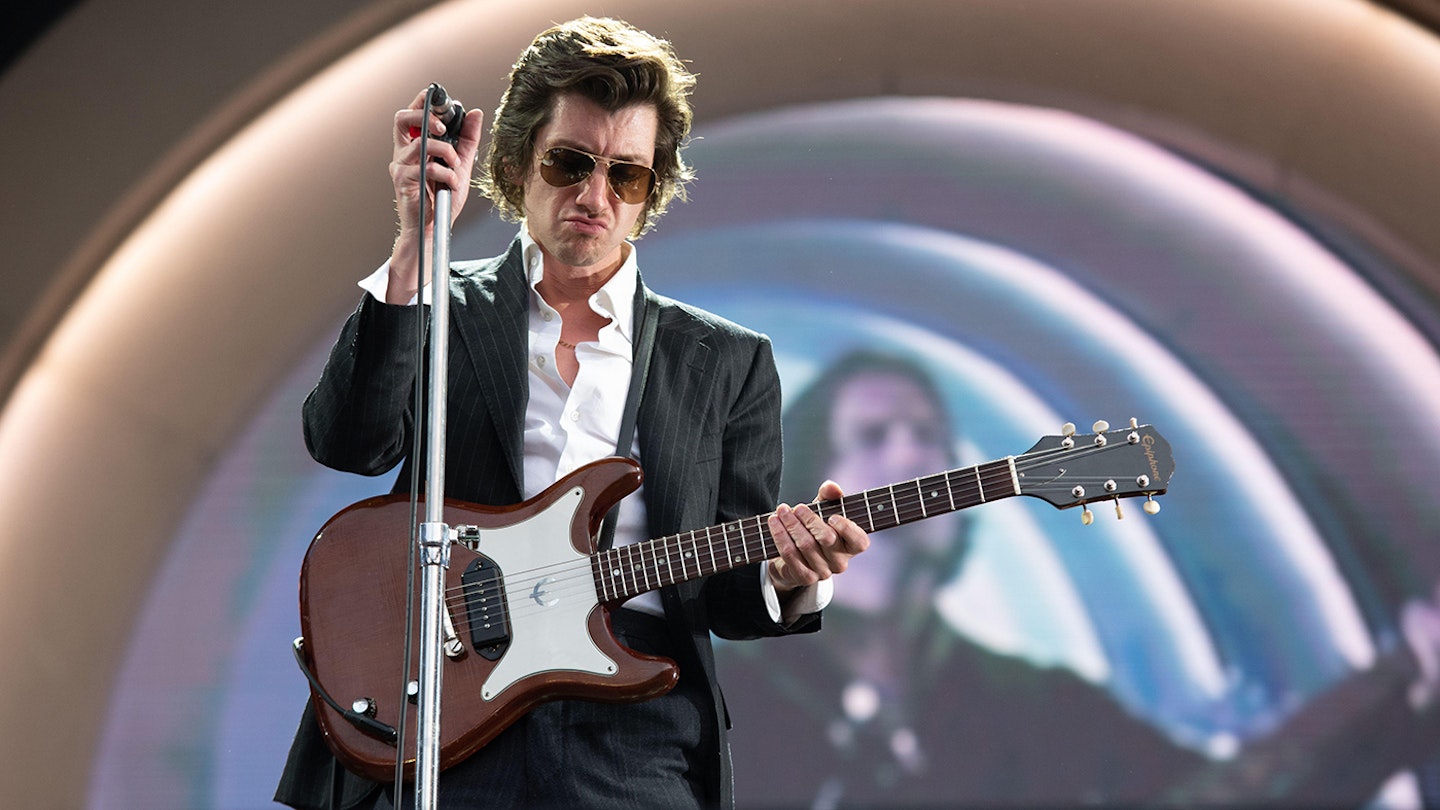
In the modern music industry, album announcements no longer arrive with glossy press releases or coordinated magazine covers. Instead, they surface quietly—through follows, likes, and fleeting Instagram stories that disappear in 24 hours. That is exactly how the latest wave of speculation around Arctic Monkeys tickets began. Fans didn’t notice a single post from the band. They noticed a producer.
Over the past few weeks, eagle-eyed fans have been tracking the online activity of James Ford, the long-time sonic architect behind some of the band’s most important eras. A handful of subtle digital breadcrumbs—new follows, a resurfaced charity project, and renewed interaction with humanitarian music initiatives—have reignited belief that Ford is once again deeply embedded in the Arctic Monkeys’ creative process. And if history tells us anything, Ford’s presence usually signals not just new music, but a strategic realignment of the band’s sound and touring ambitions.
Crucially, insiders believe this timing is not accidental. The Arctic Monkeys Tour 2026 is widely expected to coincide with the unveiling of a new sonic chapter—one that both closes the cinematic lounge era of The Car and reintroduces the band as a commanding live force for the next decade. Ford, it seems, is once again the man holding the blueprint.
The “Help” Re-Recording Rumor: AM8 or a Charity Single?
The most intriguing leak currently circulating fan forums revolves around a mysterious re-recording session tied to the legendary Beatles track “Help.” According to multiple unverified sources, the Arctic Monkeys have recently revisited an unfinished or previously unreleased recording—not for a commercial single, but for a 20th-anniversary charity compilation connected to War Child.
What transformed this rumor from background noise into a full-blown theory was a simple digital action: James Ford following the official War Child account, followed shortly by the charity engaging with Ford’s recent studio content. For longtime fans, this interaction set off alarms. Ford’s involvement in charity compilations has historically aligned with moments when the band is already active in the studio, using side projects as creative testing grounds.
The bigger question, however, is whether this “Help” re-recording is merely a standalone charitable contribution—or a sonic test run for AM8. The Arctic Monkeys have previously used covers, B-sides, and one-off sessions to explore textures that later defined full albums. If this project exists, it could represent an early glimpse of where their sound is headed: urgent, emotionally direct, and designed to translate powerfully in live environments.
Why James Ford Is the “Smoking Gun”
James Ford is not just another producer in the Arctic Monkeys’ orbit. He is, arguably, the band’s most trusted collaborator. From Favourite Worst Nightmare to AM and beyond, Ford has repeatedly helped the group navigate stylistic pivots without alienating their core identity. When fans refer to him as a “creative anchor,” they are not exaggerating.
What makes the current moment especially compelling is Ford’s recent production résumé outside the band. His latest projects emphasize immediacy—tight drum sounds, assertive guitar tones, and vocals pushed forward in the mix. These elements stand in stark contrast to the restrained, orchestral atmosphere of The Car. For fans who felt that era prioritized mood over momentum, Ford’s renewed involvement suggests a recalibration.
Industry insiders also point to Ford’s role evolving beyond traditional production. Increasingly, he is seen as a creative director—someone who shapes not just the album, but the way it is rolled out, toured, and contextualized. That distinction becomes crucial when examining the broader strategy behind the Arctic Monkeys Tour 2026.
The Sound Shift: Moving Away from The Car
No Arctic Monkeys era exists in isolation. Each album reacts to the last, often swinging the pendulum in the opposite direction. After the slow-burn glamour of Tranquility Base Hotel & Casino and the cinematic restraint of The Car, many fans and critics alike believe the next project will reintroduce velocity.
Hints of this shift have already surfaced. In past interviews, drummer Matt Helders has teased that the band has been experimenting with “up-tempo” ideas—language that immediately reignites memories of early Monkeys energy. When paired with Ford’s recent production style, the implications are clear: tighter rhythms, sharper guitars, and songs built to erupt rather than simmer.
This doesn’t necessarily mean a full return to 2006 indie chaos. Instead, insiders expect a mature hybrid—songs with propulsion and grit, but informed by the band’s expanded musical vocabulary. Ford’s skill has always been balancing rawness with sophistication, making him uniquely suited to execute this transition.
The Bang Bang Recordings LLP Significance
Adding another layer to the mystery is the quiet incorporation of Bang Bang Recordings LLP in August 2025. While new label structures are not uncommon for established artists, the timing and secrecy surrounding this move have fueled intense speculation. Many believe the entity represents a shift toward greater creative autonomy—one that allows the band to control not only their recordings, but their broader artistic narrative.
Within this framework, Ford’s role becomes even more significant. If Bang Bang Recordings functions as a creative umbrella rather than a traditional label, Ford could effectively serve as its sonic curator. This would align with his deep familiarity with the band’s identity and his ability to translate that identity across different mediums—albums, visuals, and live production.
From a touring perspective, this setup makes perfect sense. A punchier, guitar-driven record released under a semi-independent banner would position the Arctic Monkeys Tour 2026 as both a celebration and a statement: proof that the band can evolve on their own terms while still commanding global attention.
Conclusion: The Blueprint for a 2026 Return
When viewed individually, each of these signals—the War Child connection, the rumored “Help” re-recording, the Bang Bang Recordings incorporation—could be dismissed as coincidence. Together, they form a compelling narrative. At its center stands James Ford, once again emerging as the band’s most trusted architect.
As the Arctic Monkeys prepare for what could be their most strategically important tour in years, all signs point to a carefully managed reset. Not a nostalgic rewind, but a recalibration—one that reconnects urgency with elegance, movement with meaning. If the Arctic Monkeys Tour 2026 does indeed usher in a new era, history suggests Ford will be the one ensuring that era lands with maximum impact.
Resource
https://en.wikipedia.org/wiki/Arctic_Monkeys
https://en.wikipedia.org/wiki/James_Ford_(musician)
https://en.wikipedia.org/wiki/War_Child_(charity)
https://en.wikipedia.org/wiki/Matt_Helders


